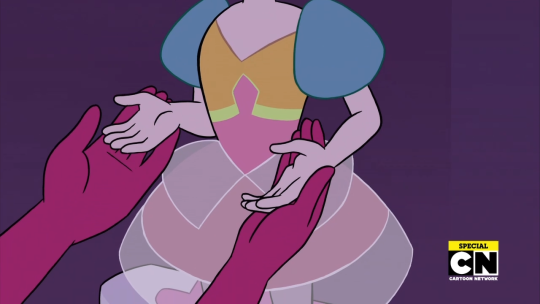
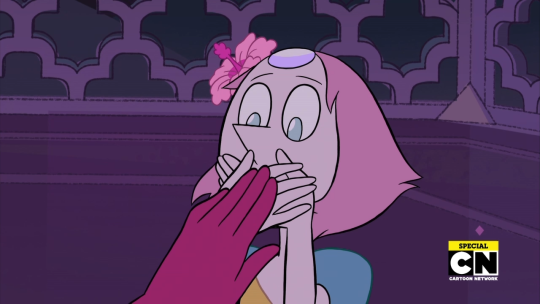
Pink took Pearl’s hands, crossed them one over the other, and said, “Let’s never speak of this again.” After this, Pearl was literally incapable of talking about what she did.
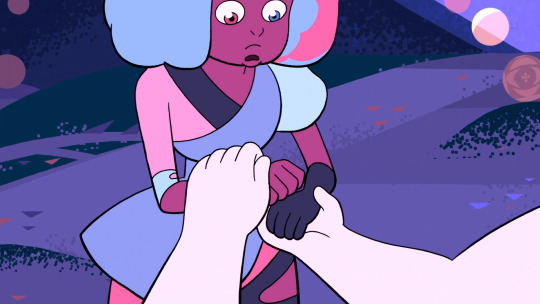
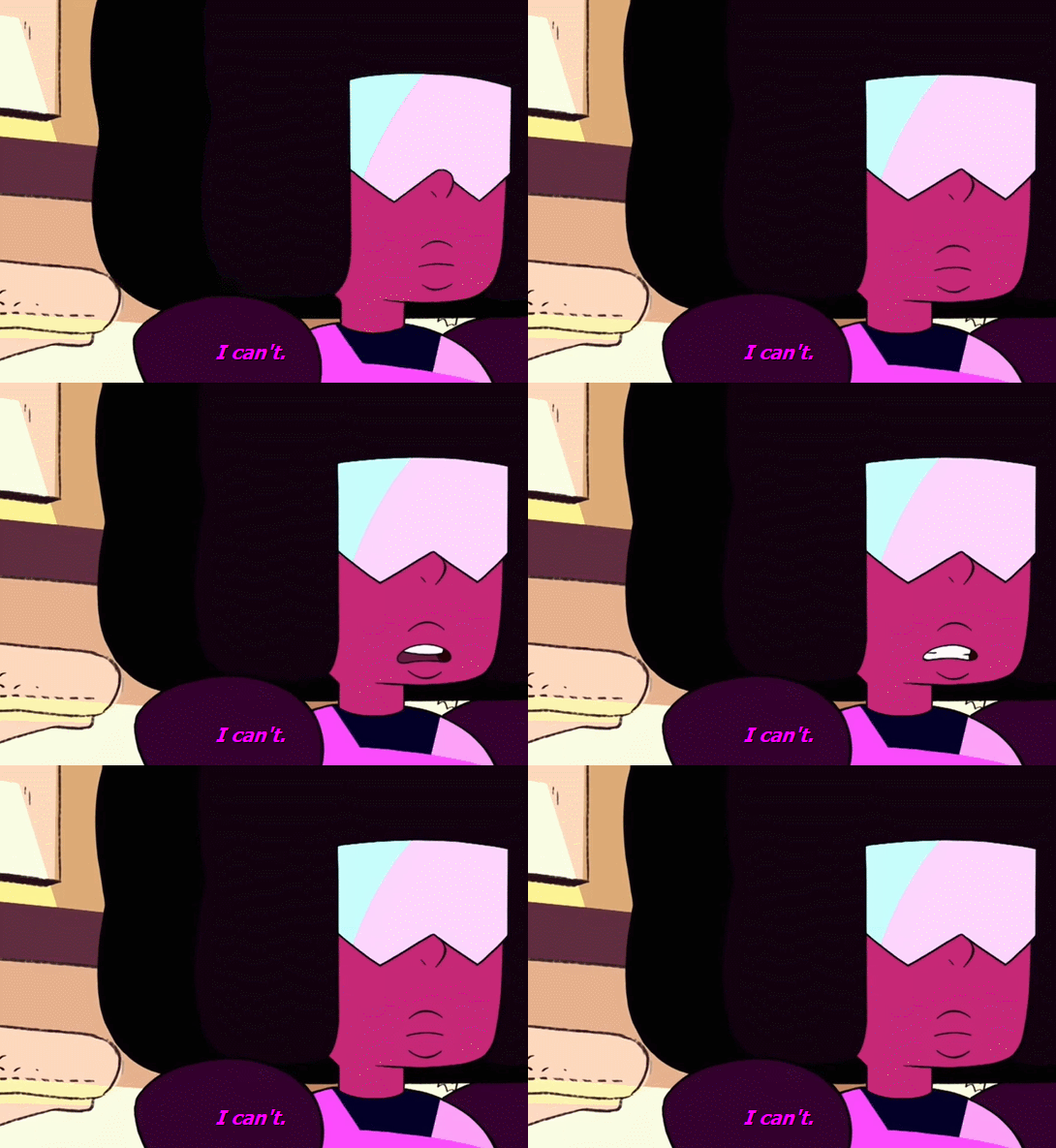
In The Answer, Rose took Garnet’s hands, crossed them one over the other, and told her, “No more questions.”
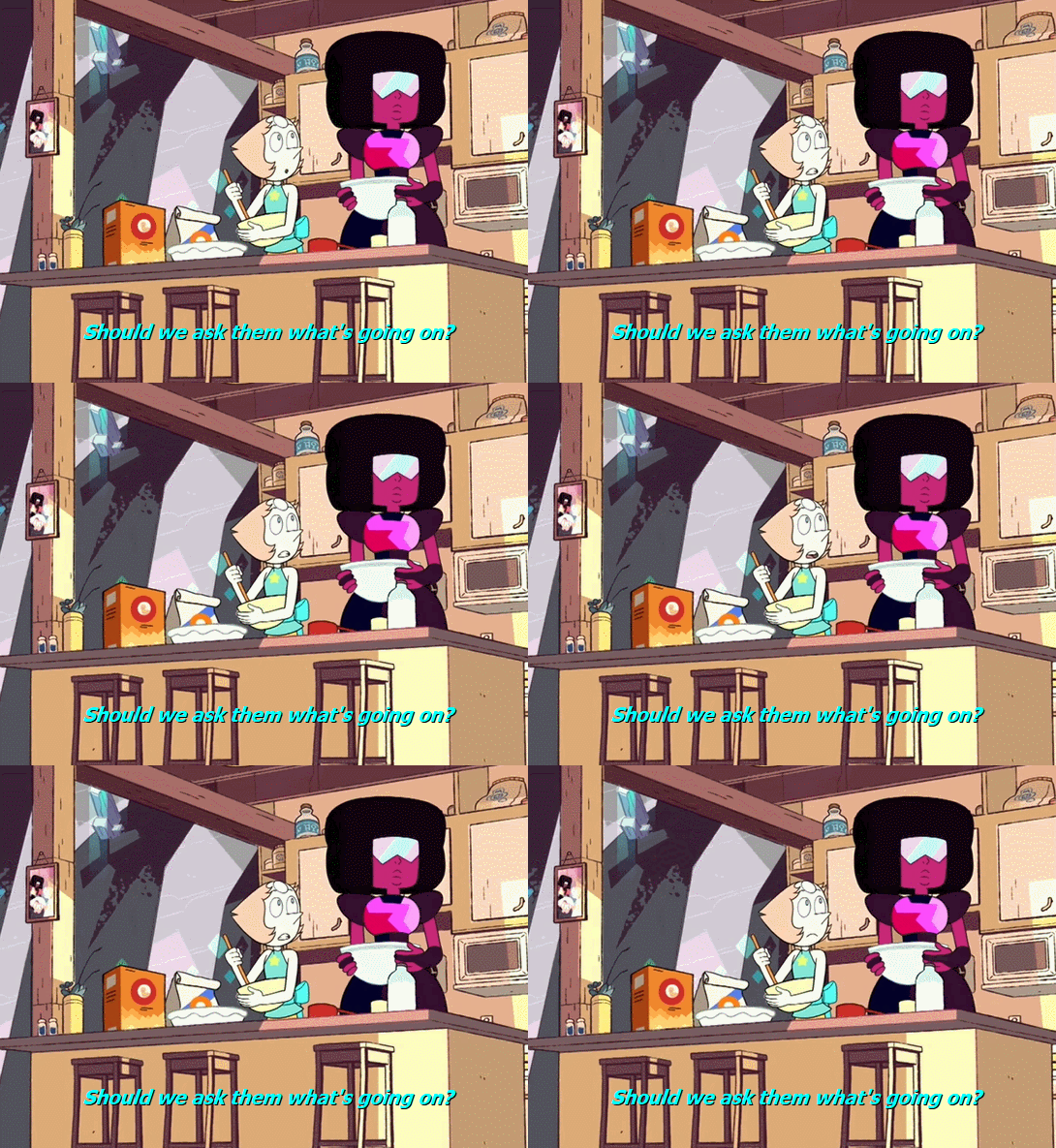
I just want to point out that in the podcast they discussed one of the rules in the show bible being that Garnet can’t ask questions. The writers are not allowed to write garnet asking a question ever. The explanation was that they do this in order to keep her sounding decisive, which makes sense in keeping with her future vision and confident attitude. I literally have not thought about this scene since the episode aired and now I’m screaming because listen
Is this a cute nod to their writing strategy? OR is their decision to make this characterization rule alluding to a much much darker thing that they haven’t been telling us?
oppression isn’t generational and trying to frame politics as “the old people are wrong and the young people are right” erases the fact that there are old people who have been fighting the good fight for decades and the fact that there are young people who are literally nazis
Plus while there might be less old people fighting the good fight it’s usually because they were killed or were part of the minorities that have poor living conditions that kill you early
Louisiana voters during Tuesday’s midterm elections approved Amendment 2, eliminating a Jim Crow law that made Louisiana one of two states allowing non-unanimous juries in felony trials.
In the late 19th century, Louisiana was faced with a new constitutional requirement, after the passage of the US Constitution’s 14th Amendment, that forced the state to include black people in juries. Since Louisiana required juries to reach unanimous decisions, as is standard, this meant a single black person on the jury would have a lot of power — which would weaken white Louisianans’ hold over the state, its government, and its laws.
The state found a workaround. As part of a constitutional convention in 1898 meant to “perpetuate the supremacy of the Anglo-Saxon race in Louisiana,” it enacted a slew of Jim Crow measures. One of them allowed split juries for felony trials, so the few black jurors could be easily overruled by a white majority.






 SliceOSunshine