REGISTRATION FOR THE 2019 TODODEKU BIG BANG IS NOW OPEN!!!
REGISTRATION IS OPEN FROM NOW UNTIL DECEMBER 15 (11:59pm EST -5) FOR WRITERS, AND DECEMBER 20 (11:59pm EST -5) FOR ARTISTS!
The TodoDeku Big Bang is a collaboration event between artists and writers who ship TodoDeku, in order to create more content for the ship, along with celebrating each other and our fandom!
So how does a Big Bang work?
Writers will create an original, new work about TodoDeku in any interpretation, genre, and universe they wish! This year, our theme is Everyday Magic. You may stick to the theme if you wish, or you can do your own thing! The final piece must be a minimum of 10,000 words long and cannot be shared (publically or privately) until their assigned posting date. On December 21, artists will be shown anonymous summaries of fics that authors are creating. Artists will then fill out a form stating their top 10 fics that they would like to collaborate with. At least one fully completed work of art must be submitted on their assigned posting date.
This is a great opportunity for us as a fandom to come together and celebrate these characters and our love for them. This is not a competition, and all skill levels are invited to join us. This is also a great chance to make friends!
Sign ups
If you would like to participate as a writer, click here!
If you would like to participate as an artist, click here!
If you would like to participate as a beta reader or pinch hitter, click here!
It took me about 15 seconds in to realize what was happening in this vid, but the second I did, I legit came. This is… I got chills and got so much validation for my theories about tap and pretty much any genre of music here…
For people who want to use Dreamwidth, but are totally confused about how it works!
What is Dreamwidth?
Dreamwidth is a social media platform founded in 2009 after Strikethrough
It’s made out of a heavily-modified version of Livejournal code
It’s based around producing your own original content, and seeing original content other people post
The site is owned and run by fans and aims to provide creative people with an Internet home
Getting around your account
Your journal is like your “home”. It’s where you keep your stuff. It’s got different parts:
Recent Entries: View your posts in chronological order
(yourusername.dreamwidth.org)
Profile: Your “about” page
(yourusername.dreamwidth.org/profile)
Archive: See your posts as a calendar
(yourusername.dreamwidth.org/archive)
Tags: See all the tags you’ve used and go to their posts
(yourusername.dreamwidth.org/tag)
Memories: Like the “Likes” feature on Tumblr
You also have a “Reading” page (yourusername.dreamwidth.org/read)
This is like your Tumblr dash
It’s where you read entries from your “circle”, the people and communities you’re subscribed to
You can customize it a lot with filters and control who you see when
You also have a “Network” page (yourusername.dreamwidth.org/network)
This is where you see posts from everyone that everyone in your circle subscribes to
It’s a great way to discover new stuff and also learn what awful taste some of your circle members have
Finding new things
Listing an Interest in your profile is like getting listed in the phonebook. This is opt-in, choosing to say, “Yes! I’m really into this thing! Consider me a person who blogs about it!
Content Search is the more powerful way to search through the blog of everyone who’s opted into it, so you can look for everyone who’s posting about a certain thing right now. However, you’ll have to wade through a lot more junk.
Communities are Dreamwidth’s social hubs. They’re places where a lot of people can share content they’re interested in and talk to each other. Unlike Tumblr tags, they’re managed by specific people and have rules, so people behaving badly can get kicked out.
Latest Things is a direct firehose of EVERYTHING PUBLICLY POSTED TO THE SITE, HOMG
Privacy controls?! That’s a thing?!
You get to choose who sees your posts! You can make your posts public, private, or “locked”, which means only people you’ve added to your access list can read them
When you add a new person to your circle you can choose to subscribe to them, to make their posts show up on your Reading page, and/or to grant access, which lets them see your locked posts. You can do one, the other, or both!
Likewise, communities can make posts viewable to members only.
You can also create custom access filters, to allow only some of your access list to see a post.
Banning someone means they cannot leave you comments or send you messages. There are more advanced tweaks to make sure they never show up on your reading page if they post to a community you subscribe to, or remove them from the comments on a post.
Comments
The comments to a post are where the real fun happens.
Comments are sent to the email of whoever you’re replying to. They’re a real conversation. You’re not shouting into the void–you’re talking back directly to the post’s originator and other commenters.
You can edit your comment so long as it hasn’t been replied to, and you can delete your own comments.
The originator of the post, and administrators if it’s a community, can delete threads, or “freeze” them, leaving them intact but preventing anyone from replying to them.
You will add new skills to your resume
Dreamwidth leaves a lot more “backend” open so you can customize your experience to a huge degree. However, this means learning or using coding languages like HTML and CSS
The comment box on entries does not have a built-in text editor, so you will have to add your own HTML if you want to add <i>italic</i>, <b>bold</b>, or <a href=“http://websiteurl.com”>links</a>.
The real cherry on this shit cake is that no one I’ve spoken to is getting any kind of email or notification that their posts have been flagged as explicit.
Because you thought your blog was SFW, and the ban-bot is losing its fucking mind, and no one told you that you’d been targetted.
So like, please. If you see someone has been flagged as NSFW incorrectly, let them know.
Because tumblr sure fucking won’t.
This is correct. No notifications have been sent to me either. Of course the post I made had nothing even remotely NSFW. There was one teeeny male nipple.
when i watch old movies i’m constantly surprised by how much acting has improved. not that the acting in the classics is bad, it’s just often kind of artificial? it’s acting-y. it’s like stage acting.
it took some decades for the arts of acting and filmmaking to catch up to the potential that was in movies all along; stuff like microexpressions and silences and eyes, oh man people are SO much better at acting with their eyes than they were in the 40′s, or even the 70′s.
the performances we take for granted in adventure movies and comedies now would’ve blown the critics’ socks off in the days of ‘casablanca’.
there’s a weird period in film where you can see the transition happening. right around the fifties, I think. the example my prof used when i learned about it was marlon brando in “a streetcar named desire” – he was using stanislavski acting methods and this new hyper-realistic style and most or all of his costars were still using the old, highly-stylized way of acting. it makes it way more obvious how false it is.
i even noticed it in ‘the sting’, which was 1973. i actually think they used it on purpose to get the viewer fished in by the second layer of the con; the grifters at the bookie’s were acting like they were acting, and the grifters playing the feds were acting for reals. if you’re used to setting your suspension of disbelief at the first set’s level, then the second set are gonna blow right past you.
or possibly the guys playing the grifters playing the feds just happened to be using the realistic style for their own reason, and it coincidentally made the plot twist work better. but i like to think it was deliberate.
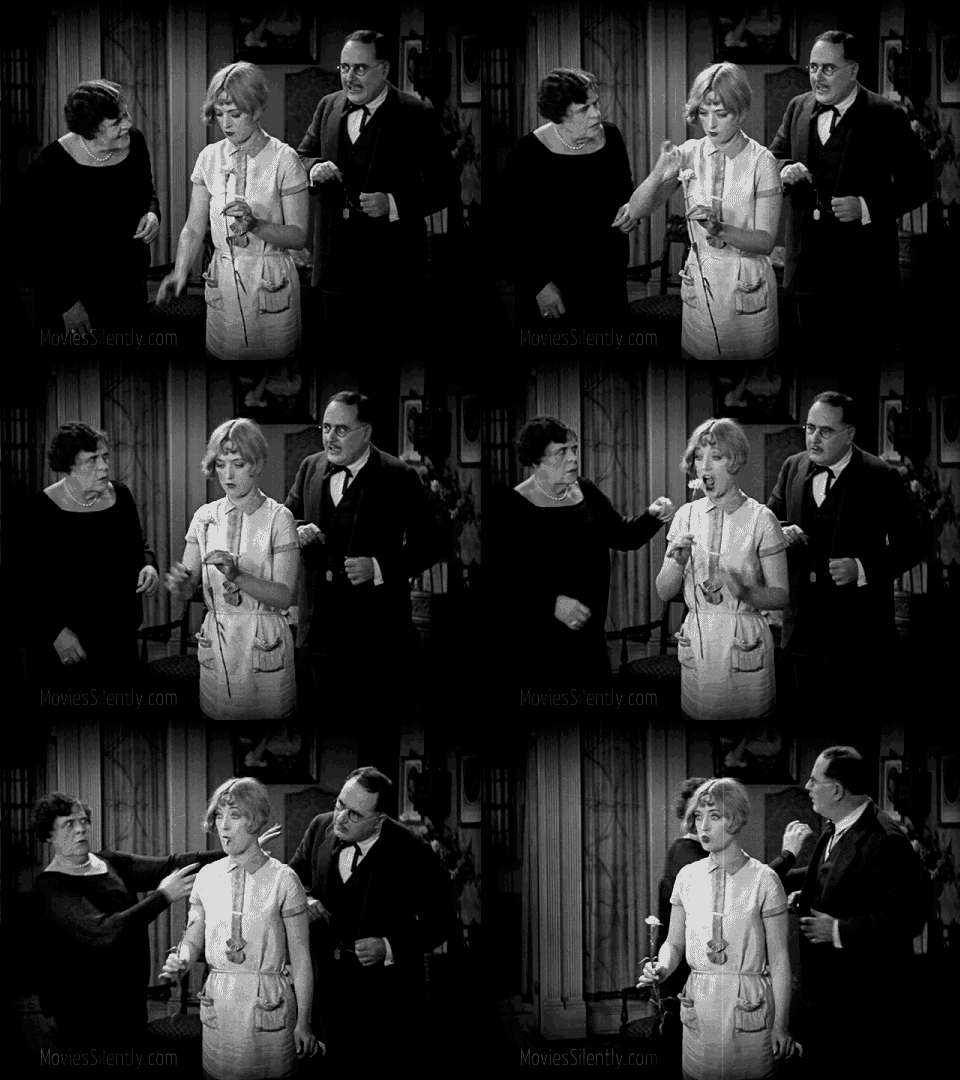
i was thinking about this again, and when you know what to look for, it’s really obvious: old movies are stage acting, not movie acting. it just didn’t really occur to anyone to make the camera bend to the actors, rather than the other way around. just image search old movie screenshots and clips and gifs, you’ll see it. the way people march up to their mark and stand there, the way they deliver their lines rather than inhabiting the character. the way they’re framed in an unmoving center-stage.
this is a charming little tableau, quirky and unexpected, but it’s a tableau. it lives in a box.
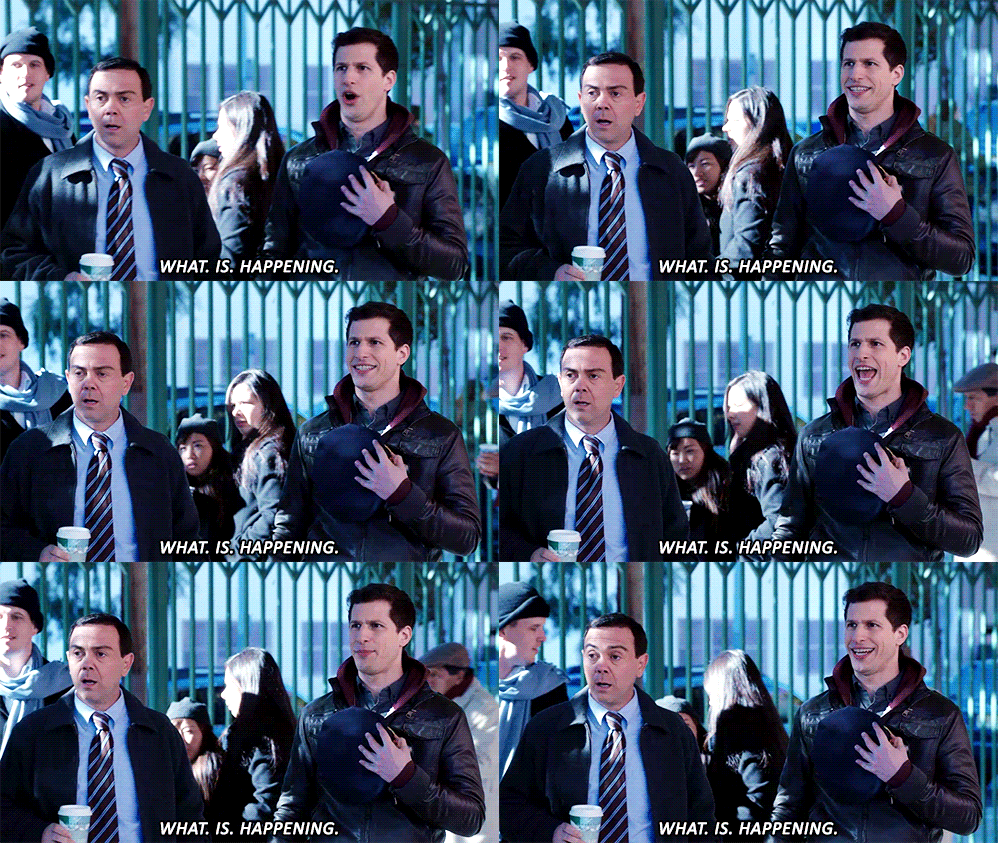
now, i usually watch action movies, and i didn’t think it was fair to compare an action movie with what appears to be an indoor sort of story, but i do watch some comedy tv. so i looked for a brooklyn 99 gif with a similar framing, intending to point out that the camera moves, and the characters aren’t stuck inside the box. but i couldn’t even find the framing. they literally never have all the characters in the same plane, facing the camera, interacting only within the staging area. even when they’re not traveling, they’re moving around, and they treat things outside the ‘stage’ as real and interact with them, even if it’s only to stare in delighted horror.
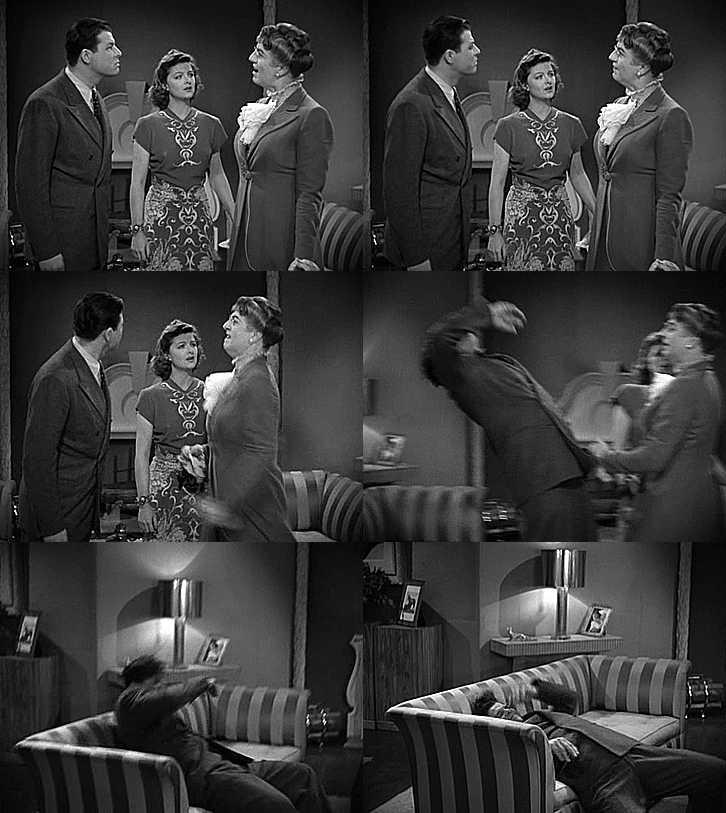
as for action, it took a while for the movies to figure out what, exactly they wanted to show us, and how to act it. here’s a comedy punch:
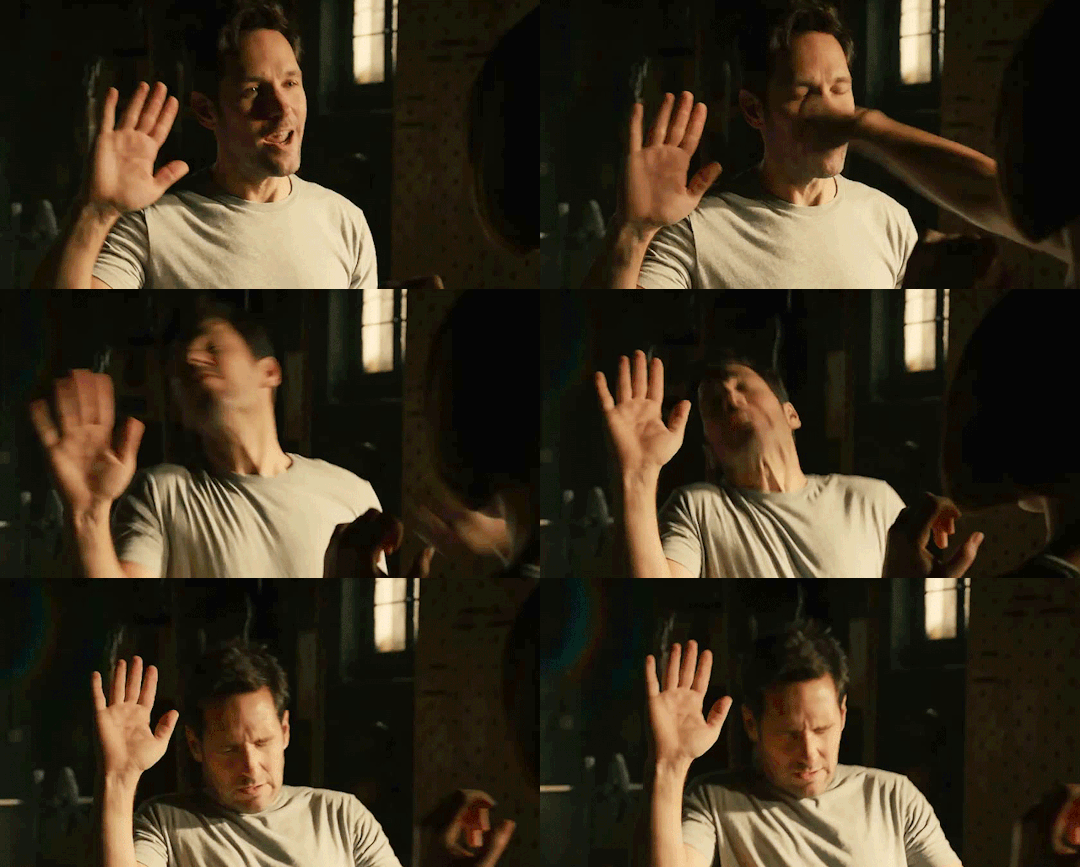
here, also, is a comedy punch:
the first one looks like a stage direction written on a script. the second one looks like your friends horsing around and being jerks to each other. the first one is just not believable. the physics doesn’t work. the reaction is fakey. everyone’s stiff. even the movement of the camera is kind of wooden. the second one looks real right down to the cringe of his shoulder, and the camera feels startled too.
i’m not saying this to dis old movies, i’m just fascinated and impressed by how much the art has advanced!
I’m going to bed, but I also want to say that I think, without actually bothering to explore it and make sure, that there’s been a similar shift in comics, probably related to the shift in acting/camera work. And I think you still see remnants of old “stage acting” comics in the three-panel style set ups (you might still see it in long form comics, but you’d probably call it bad composition)
Now can someone explain why people in old films talked Like That
Y’all, THAT’S HOW PEOPLE TALKED.
Seriously, I used to work in a sound studio, and one series of projects required us to listen to LOTS of old audio recordings. Not of anything special – just people talking.
AND THEY TALKED LIKE THAT.
It was so fucking wild to hear just a couple of people being like,
“WELL HI THERE JEANINE, HOW ARE YOU TODAY?”
“OH, NOT TOO BAD, JOE, THOUGH MY HUSBAND’S BEEN AWAY ON BUSINESS FOR A FEW WEEKS AND I MISS HIM SOMETHING TERRIBLE.”
“WELL IT’S A HARD THING, JEANINE, BUT YOU’LL GET THROUGH IT.”
“WELL I SUPPOSE I’VE GOT TO, HAVEN’T I JOE?”
All in that piercing, strident, rapid-fire style we associate with the films of the era. If you’ve watched lots of old movies you can imagine the above in that speech pattern.
I don’t know if people talked like that because it was in movies but I suspect it’s the other way around.
That’s why it’s so interesting to see really talented actors like Clara Bow or Buster Keaton because today their films feel a LOT less dated than say Harold Lloyd’s. They’ve got all the subtlety and nuance down and Keaton’s films in particular are shot in really inventive ways so they don’t feel particularly dated that way either.
“Ever wonder why people in American movies from the 1930s and 1940s have that distinct quasi-British accent? It’s called the Transatlantic (or Mid-Atlantic) Accent, and has an interesting history.”


 SliceOSunshine