Congress must pass the CRA to reverse illegitimate repeal
Gizmodo has obtained internal emails that prove once and for all that the Federal Communications Commission (FCC) intentionally misled journalists about a alleged DDoS attack that prevented net neutrality supporters from submitting comments immediately following viral segments of the issue by comedian John Oliver.
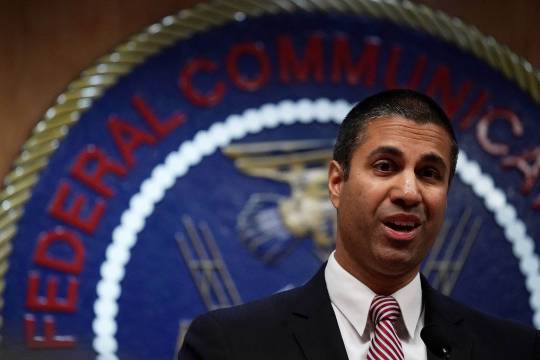
Fight for the Future has played a leading role debunking the FCC’s dubious claims about these attacks, and shining a light on the rampant issues of fraud and abuse that have plagued Ajit Pai’s agency’s net neutrality repeal process. The group released the following statement, which can be attributed to deputy director, Evan Greer (pronouns: she/her):
“This is a smoking gun. The FCC lied to reporters, and to Congress, in order to obscure the fact that they utterly failed to maintain a legitimate public comment process, as they are legally required to do, in their net neutrality repeal proceeding.
Overseeing the FCC is Congress’ job. They need to do their job and pass the Congressional Review Act (CRA) resolution to reverse the agency’s illegitimate and unpopular decision. Voters from across the political spectrum overwhelmingly oppose the gutting of net neutrality. No one wants their cable company controlling what they can see and do on the Internet.
Inaction is unacceptable. Any member of Congress who remains silent and fails to sign the discharge petition should prepare to face the Internet’s wrath come election time.”
Fight for the Future and other groups are planning mass online actions to coincide with the official date that the FCC repeal goes into effect.
But along with many other arguments from Pai’s camp—like the frequently disproven assertion that net neutrality rules have stifled telecom investment—this belief that the FTC will be able to fill in for the FCC doesn’t hold much water. When it comes to net neutrality, the FTC is ill-equipped to regulate the industry in a number of ways, and all we have to do is look at the the way ISPs used to act.
“Before we had rules, we did see ISPs blocking things like VoIP, blocking tethering applications so they could extract more from consumers in monthly fees, blocking peer-to-peer sharing applications,” Laura Moy, the deputy director of the Georgetown Law Center on Privacy and Technology, told the House Committee on Energy and Commerce Wednesday during a hearing on consumer privacy. “We certainly have seen examples in the past of ISPs using their power as gatekeepers to prevent users from using services that they may well want to use.”
There was the time AT&T tried to block its subscribers with iPhones from using Facetime unless they paid an additional fee. Or the time Comcast used covert technology to limit users from accessing peer-to-peer sharing networks, including BitTorrent. Or when Verizon blocked texts from a pro-choice organization to supporters. There are multiple examples of ISPs sidestepping or ignoring net neutrality prior to the regulations, which is what we would return to if the FCC scraps the rules.
Supporters claim these examples only bolster their argument, because in each case the FTC or another entity stepped in to correct the company, which is true, but a far departure from having established, enforceable rules upholding the most basic ideals of net neutrality: no throttling, no censoring, and no fast lanes.
One would hope that the federal agency tasked with policing net neutrality would be able to create new regulations in response to new indiscretions. But unlike the FCC, the FTC has little to no ability to create its own regulations. It also, by design, only acts after the fact, which hardly protects consumers, particularly if the shady behavior isn’t noticed right away by the powers that be. And in almost all cases, the FTC only cracks down when a company has deceived its customers, which won’t always apply in net neutrality cases.
“As a practical matter, the FTC almost never enforces unless it determines that there is deception that has occurred,” Moy said. “There’s very little in the way of teeth when it comes to the FTC’s authority.”
If that’s not convincing enough, there’s also the tricky matter of the fact that nobody’s even sure if the FTC is allowed to regulate ISPs at all. A pending case in the Ninth Circuit Court of Appeals between the FTC and AT&T will determine if common carriers—which currently includes ISPs—should be regulated under the FTC or the FCC.
This is something that is very important to pay attention to, and if you are an American I implore you to do everything that you can! Contact your representatives, research your ISPs, and keep a vigilant eye on this! The FCC is likely to make this ruling close to Thanksgiving in an attempt to squeak it by without anyone noticing.
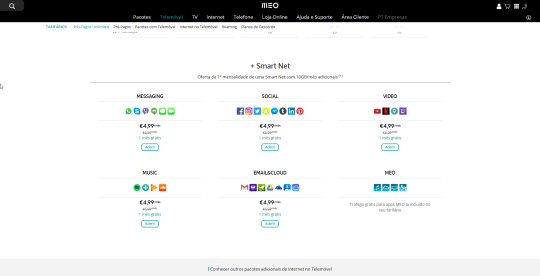
Net neutrality is the reason why you can visit any website confidently. It’s why you don’t have to pay a premium to be able to access YouTube. It’s why you don’t have the internet bundled into different packages like TV is.
If they remove net neutrality protections, then there is no benefit to the consumer. Put simply, your ISP could choose to charge you more in order to visit specific sites, and not every town in the United States has the option to switch to a new ISP because some ISPs hold a monopoly in some areas.
This is what the internet looks like without net neutrality:
They’re trying to fatigue public resistance by trying to repeal net neutrality as often as possible. We have to stay vigilant. Motivate yourself by assuming no one else is calling/writing. Don’t assume other people will do it.
 SliceOSunshine